Menu

1 Best Geologic Formations in Brisbane

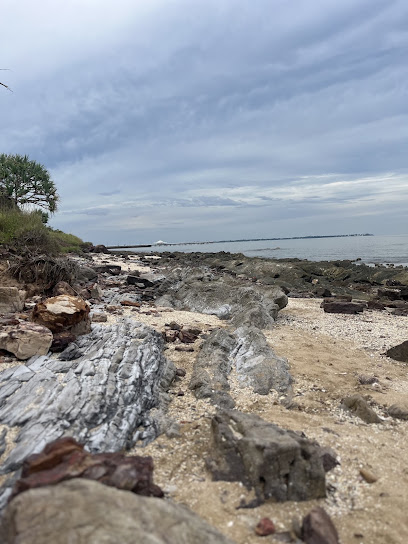
For a Brisbane geology outing, Shorncliffe Geological Site combines a coastal walk with visible geological features and hands-on shoreline exploration. Its cliffs contain Triassic sedimentary rocks from the Woogaroo subgroup of the Landsborough sandstone deposits, with a fault line at the southern end.

It is a strong fit for families, school-style excursions and curious walkers who want geology alongside beach scenery. Plan around the shore setting, allow time for rock and shell observation, and remember that the exact fault-line location is not clearly indicated.

How this guide is ordered

Every business on this page was measured on the same four things: how focused it is on geologic formations, how its clients rate it, how much it tells you up front and which parts of Brisbane it looks after.

Businesses on this site may take up paid services that lift how visible they are.

Top 3Full listMapHow to choose

Featured Geologic Formations in Brisbane

Select an option to see its summary.

Geologic Formations in Brisbane Compared

Shorncliffe Geological Site, Brisbane#1
What stands out
  • Triassic coastal rock formations

  • Rock pools and shore walking

Shorncliffe Geological Site

4.823 reviews
Shorncliffe QLD 4017, Australia
Best for
Family rock and shell explorationOutdoor geology learning

Shorncliffe Geological Site is an outdoor coastal area where visitors can combine a shore walk with rock pools, beach scenery, shell spotting and geological observation. The site’s cliffs contain Triassic sedimentary rocks assigned to the Woogaroo subgroup of the Landsborough sandstone deposits, with a fault line visible at the southern end.

It suits families, school-style excursions and curious walkers who want to connect outdoor exploration with local geology. Children can look for rocks and shells while learning that a familiar shoreline can also have formal geological significance.

Run a business?

Manage or add my business

Geologic formation site near Brisbane

Shorncliffe Geological Site is a coastal outdoor location in Shorncliffe, suited to combining shore walking with rock pools, beach scenery and geological observation. The site’s southern end is associated with a fault line. Because the visit involves an outdoor shoreline setting, plan your route around the walk and the areas you want to explore. The exact fault-line position is not clearly indicated, so treat the geological setting as broader than a precisely marked viewing point.

What to explore at the site

  • Triassic rock observationVisitors can examine Triassic sedimentary rocks assigned to the Woogaroo subgroup of the Landsborough sandstone deposits.
  • Fault-line explorationA fault line is visible at the southern end, although its exact location is not clearly indicated.
  • Shore walkingThe coastal setting supports a walk combining geological observation with beach scenery.
  • Rock-pool explorationRock pools add an accessible outdoor feature for visitors exploring the shoreline.
  • Shell and rock spottingFamilies and children can look for shells and rocks while connecting observations with local geology.
  • Outdoor learningThe site suits school-style excursions and informal learning about the geological significance of a familiar shoreline.

How to plan a geology visit

  1. Match the visit to the groupDecide whether your priority is formal geology learning, a family shore walk, rock-pool exploration or a mix of all three.
  2. Allow time for observationPlan enough time to examine the cliffs, rocks, shells and shoreline rather than treating the location as a quick viewpoint.
  3. Set expectations about the faultIf the fault line is central to your visit, ask locally or research the southern end beforehand because its exact position is not clearly indicated.
  4. Choose an outdoor-learning formatFor a school-style excursion, prepare questions about sedimentary rocks, the Woogaroo subgroup and Landsborough sandstone deposits.

Frequently asked questions

What geological feature can be seen at Shorncliffe?

The cliffs contain Triassic sedimentary rocks assigned to the Woogaroo subgroup of the Landsborough sandstone deposits. A fault line is visible at the southern end, although the exact location of that fault line is not clearly indicated.

Is Shorncliffe Geological Site suitable for children?

Yes. The site suits families and children who enjoy looking for rocks and shells, exploring rock pools and learning how a familiar coastal shoreline can have formal geological significance. It also works for school-style outdoor learning.
Can I combine geology with a walk?

The site is an outdoor coastal area where geological observation can be combined with shore walking, beach scenery and rock pools. It therefore suits visitors who want an active outing rather than an indoor geology display.

Is the fault line clearly marked?

The site description places the fault line at the southern end, but the exact fault-line location is not clearly indicated. Visitors who specifically want to find it should plan for broader observation of the coastal cliffs and surrounding shoreline.

Related guides